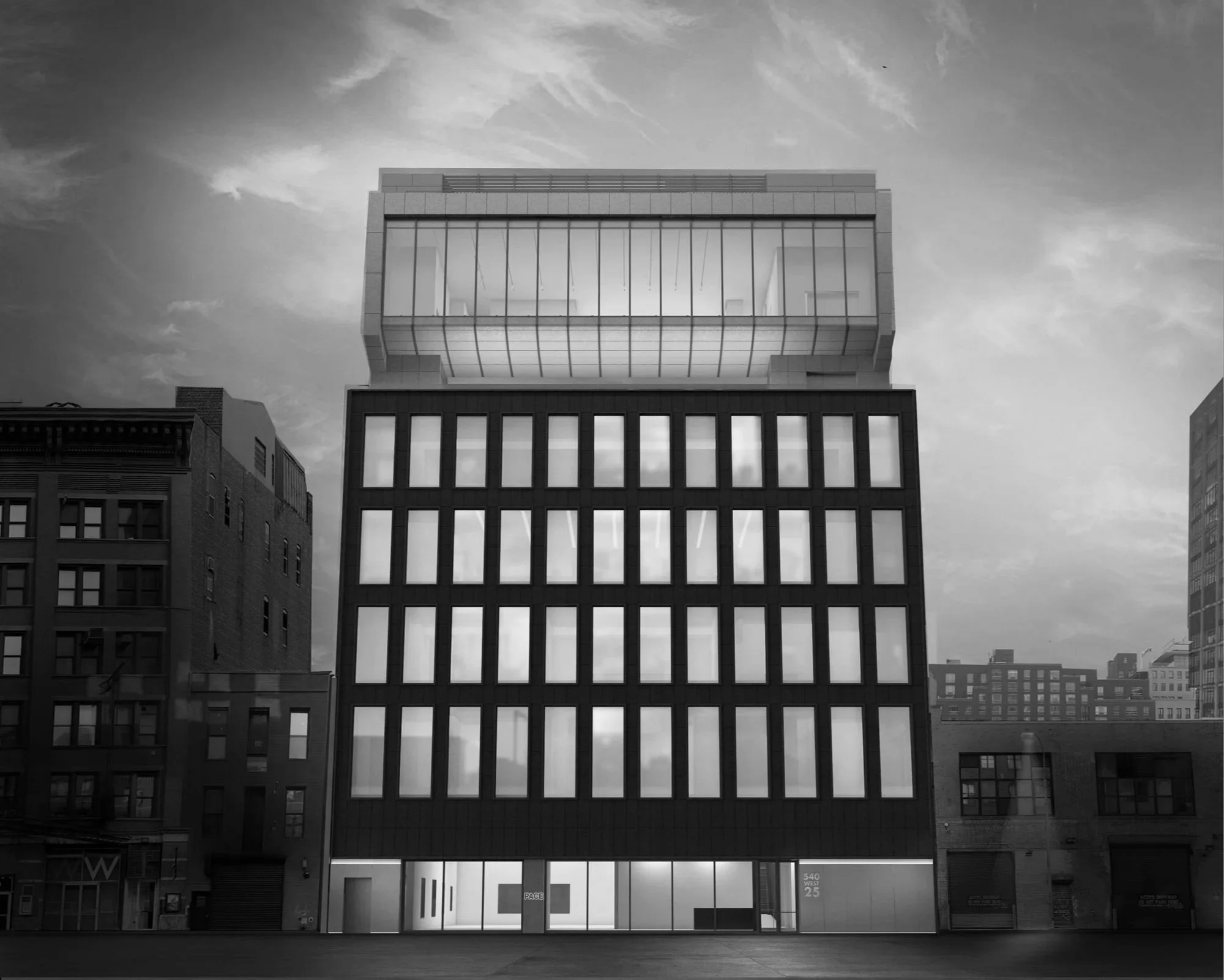
Slowing Down the Pace: Broken Models or Bad Business?
Bitesize | June 2026
A free taster of the Bulletin
Welcome to Bitesize, a free preview that introduces the key themes and questions that we explore in this month’s subscriber-only Bulletin.
This month's Bulletin opens with a bombshell. In June, Pace Gallery – one of the art world's mega galleries – announced it was dropping nearly 40 percent of its artists and 20 percent of its staff. The news was significant, the conversation it provoked was brief, and the questions it raises are far from resolved. We examine what happened, how it happened, and what it reveals about a gallery model built on the assumption of perpetual growth.
We then turn to Art Basel, where a quieter but equally telling story was unfolding: fewer collectors, more doubts, and a fair beginning to reckon with its own version of the question of growth.
In this month’s Bulletin
Why the art world moved on from the Pace announcement too quickly
How a decade of expansion was built on assumptions that proved false
Why the damage is harder to contain than it looks
Whether this is about one gallery's decisions or something structural
How the fallout is pointing to a different way of supporting artists
Whether the prestige of Art Basel is still worth the price
What the drift toward Paris says about the future of the art fair calendar
A bomb is dropped
In June, Pace Gallery announced it was dropping nearly 40 percent of its artists and 20 percent of its staff. The art world stopped, looked, and, in characteristic fashion, moved on almost immediately. The London auction season was upon us, Art Basel was approaching, and there was plenty else to focus on.
That was the wrong response.
What Pace announced in June is one of the most significant moments in the gallery sector in years, and it deserves considerably more analysis than it received. This month's Bulletin provides it, starting with what was actually announced, what was left unsaid, and what the initial reaction reveals about an industry that is more comfortable looking forward than looking at itself.
Want to read the full analysis?
The market explodes
Pace is not a mid-tier gallery struggling to weather a downturn. It is one of the art world's mega galleries: multiple spaces around the world, some of the biggest artists on its roster, a presence at every major fair. For a decade, the prevailing assumption was that galleries of this scale were insulated from the shocks that sent smaller operations under.
That assumption has now been tested. This section examines what Pace's expansion looked like from the outside – the new spaces, the technology ventures, the strategic partnerships – and what it reveals about the thinking that drove it. Growth for its own sake has a logic. It also has consequences.
The damage done
The first signs that things weren't right emerged months before the June announcement. This section looks at what was visible in hindsight, what was being said behind the scenes, and what the public statements from inside the gallery reveal about the gap between how the situation was managed and how it was experienced.
The words used by those at the top of Pace to describe what happened are, in themselves, instructive. This section reads them carefully, and asks what they tell us about accountability, ambition, and the distance between a founder's vision and the business it became.
Want to read the full analysis?
The model implodes
A gallery's assets and liabilities are not like those of most businesses. You cannot simply drop artists when times are bad and expect to pick them up again when conditions improve. You cannot replace the relationships that experienced staff carry with them when they leave. The gallery model depends on continuity in ways that a standard business restructuring does not account for.
This section examines the specific decisions that brought Pace to this point – the leases, the commitments, the costs – and asks a harder question: was this a failure of judgement, or a failure of the model itself? The answer has implications that go well beyond one gallery.
Picking up the pieces
What does the Pace announcement mean for the wider industry? This section explores that question through the eyes of people who work in it, including one person who described the news as a fault line breaking. It also examines the narrative that has taken hold in some corners of the market: that the gallery model is not just struggling, but fundamentally broken.
Not everyone agrees. And the disagreement is itself revealing – about who benefits from saying the model is broken, and who has a stake in proving it isn't.
Want to read the full analysis?
A new blueprint
Out of the fallout from another gallery closure – one covered in an earlier edition of the Bulletin – a different model is beginning to take shape. It is modest in scale and ambitious in intention, built around a small number of artists and a different set of relationships between galleries, institutions, and collectors.
It is not a revolution, but it is a direction. And in a sector that has spent the last decade building bigger, the question of whether building smaller might be the answer is one worth taking seriously.
A new address
Art Basel has set the rhythm of the art world's calendar since 1970. For most of that time, the question was never whether to go – it was when you were arriving. That is no longer the case. This section looks at what happened in Basel this June, why more galleries and collectors are asking whether the prestige is still worth the price, and what the growing appeal of Paris tells us about where the art fair world is heading.
Art Basel has not stood still. But the question is whether what it is doing to maintain its primacy is working – or whether the drift has already gone too far to reverse.
Want to read the full analysis?