The Numbers Game: A Market in Motion, and What It's Costing
Bitesize | March 2026
A free taster of the Bulletin
This month's Bulletin opens in London, where the March auctions delivered results that demanded attention – strong totals, full rooms, and a market that appeared, at least for now, to mean business.
We look at what drove the numbers, from the mechanics of attractive estimates to the theatre of a white-glove sale, and what the performance tells us about London's position relative to New York and Paris.
We then turn to the Art Basel UBS Art Market Report, moving beyond the headlines to examine three findings the press largely overlooked: a shrinking pool of top-tier buyers, a more transactional market, and the mounting pressure of operating costs on galleries at every level.
These stories speak to a market that is changing in ways the headlines alone don't capture, and to the growing gap between what the market appears to be doing and what it is costing the people who participate in it.
Below is a preview of the ground covered in the full edition.
In the Bulletin this month
What the March auctions signal about London’s place in the market.
The mechanics behind the numbers: estimates, quality, and managed risk.
Thin at the top, busy at the bottom: what this central paradox might mean for the future
Rising costs, squeezed margins and pressure across the gallery sector
London makes a statement
The March auctions in London were more than a good season – they were a signal. With volume, value and quality all up on last year and rooms full at every house, the results demanded attention. But the real question wasn't whether London had a strong month. It was what that strength means for a city that has spent several years fighting for its place in an increasingly competitive landscape.
London now jostles for position with Paris as the understudy to New York. Where the big consignments go – and why – tells us something about how the auction houses see the market, and how they see themselves. The March sales offered some intriguing answers, and a few questions that won't be resolved until the Paris sales are published.
This section of the Bulletin asks:
If the primary market is starting to accept that London is mid-tier, would the secondary market fall in line?
What does the volume, value and quality of works on offer say about the auction houses’ strategy?
Would momentum from the November auctions in New York and Frieze Los Angeles in February transfer to this side of the Atlantic?
Every edition of The Bulletin is available to members of The Back Room
Writing the script
Behind every strong auction season is a set of decisions made long before the hammer falls. Estimates, guarantees, the competitive or non-competitive nature of a consignment; these are the levers that determine not just what sells, but how it sells, and at what cost to the parties involved.
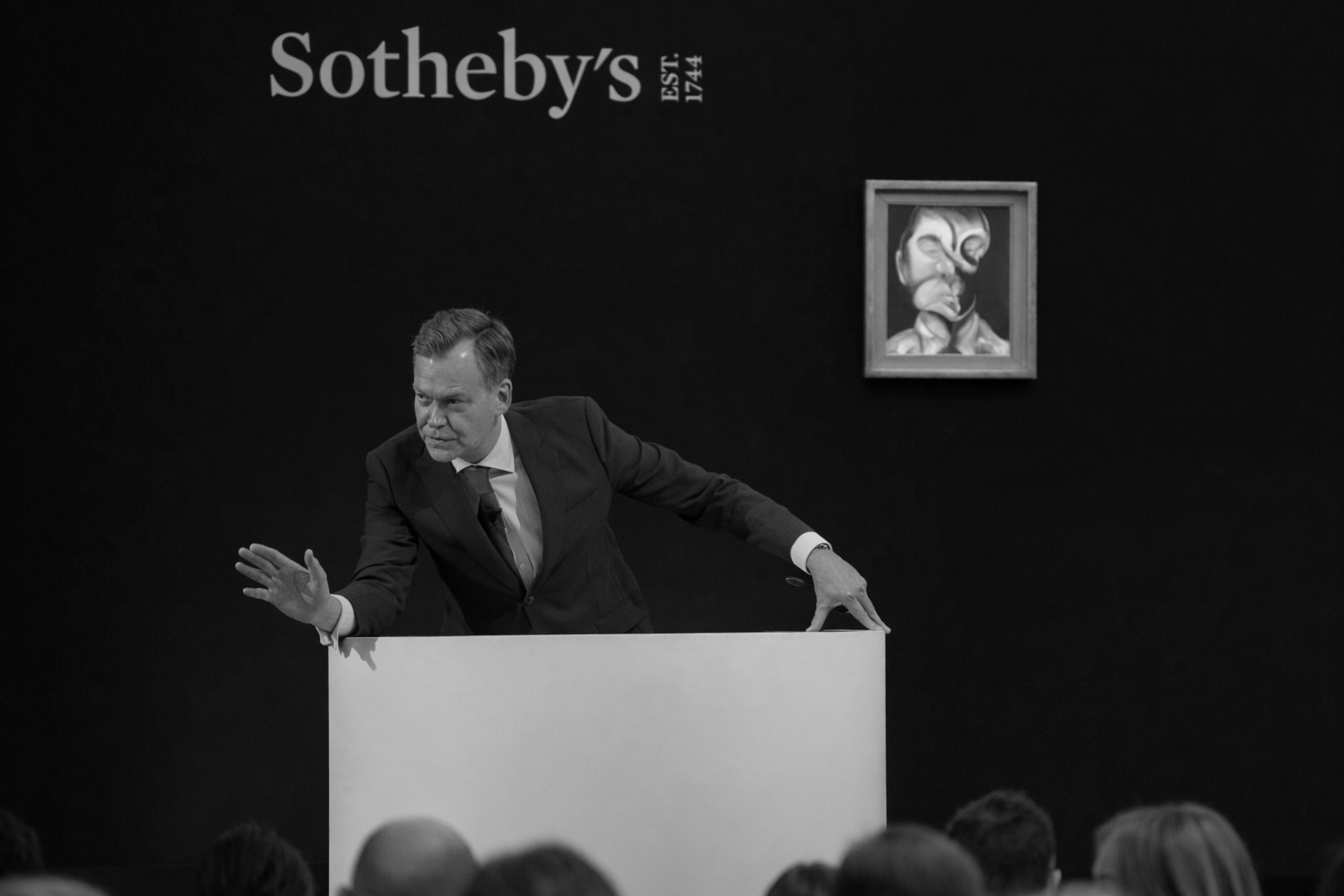
The Francis Bacon self-portrait that doubled its low estimate didn't do so by accident. Nor did the single-owner collection that attracted frenzied bidding without a guarantee in sight. Understanding why these results happened — and what the sellers and auction houses gave up to make them happen — is where the real story lies.
This section of the Bulletin asks:
What does a consignor risk to make a room compete?
What does it take – and what does it cost – to turn a cautious market into an active one?
When does perception become more valuable than profit?.
Want to know what makes an auction season the success it appears to be?
Reading between the lines
Sotheby's had a perfect night. Or did it? The white-glove sale – every lot sold, an historic first for a various-owner evening sale – was a remarkable achievement, and a powerful marketing tool. But a perfect surface can conceal a great deal of complexity underneath.
This section looks at what the optics of a strong season can obscure: the margin pressure, the shifting fee structures, and the quiet but significant ways the auction houses are changing how they do business. Including, at Christie's, the furniture.
This section of the Bulletin asks:
What is driving the rising cost of doing business, and how is the auction sector responding?
Are buyers starting to harness the power that they hold in the current market?
With your competitors tweaking their engines, is it a sign of confidence or complacency to do nothing?
Subscribers already know how emerging dynamics are shaping the market. You can too.
The art market’s annual medical
The Art Basel UBS Art Market Report arrived with its usual mixture of reassurance and anxiety. The headline – four percent growth, global sales reaching $59.6 billion – was enough to generate optimism in the press. After several years of contraction, the market had turned a corner.
But four percent growth is modest, and the detail beneath the headline tells a more nuanced story. The market is simultaneously smaller by value than it was two years ago and more active by volume than it has been in years. That apparent contradiction is where the most interesting analysis begins – and where much of the press coverage stopped.
This section of the Bulletin asks:
Is four percent growth cause for celebration, or merely relief?
What does it mean when a market is simultaneously smaller by value and busier by volume?
What does the press miss when it moves on after the headline?
Want to know the most significant findings within this mammoth report?
Thin at the top
The art market has always depended on a small number of very expensive works to generate a disproportionate share of its value. What the report reveals is that the pool of collectors willing and able to buy at that level is getting smaller. A shrinking group of high-spending buyers is accounting for a growing share of the market's top-line performance.
That sounds alarming. But the picture is more complicated – and in some respects more interesting – than it first appears. The implications for galleries, auction houses, and the collectors who will inherit this market are significant, and point toward changes that may already be underway.
This section of the Bulletin asks:
How do we rationalise the market as a whole when so much of the focus is on the tiny top end?
What happens to the market when the people who once drove its headline value start to thin out?
Is a narrowing pool of high-spending collectors a crisis, or the beginning of something more interesting?
Subscribers already know how shifting momentum is affecting the market. You can too.
Busy at the bottom
While the top of the market thins out, something different is happening further down. Transaction volumes are rising, more works are changing hands at lower price points, and a new kind of collecting activity is emerging beneath the trophy-lot headlines.
This section asks whether lower average prices are really the warning sign they're made out to be – or whether they might, counterintuitively, be one of the healthier signals in the report. The answer has implications not just for today's market, but for where it might be heading as wealth transfers to a younger generation with different tastes and different habits.
This section of the Bulletin asks:
Could lower prices somehow be good for the market?
What does it mean when the next generation of buyers shops differently from the last?
Is the market quietly finding a more sustainable version of itself?
Want to know where these findings suggest the market is heading?
The cost of doing business
Revenue may be stabilising for many galleries, but margins are not. The cost of art fairs, logistics, staffing and real estate continues to rise, and the consequences are becoming visible in real time – in sudden closures, in retreating footprints, in the quiet disappearance of galleries that not long ago seemed like fixtures.
The report addresses this, but carefully. Reading it alongside the public statements of those whose names appear on the cover raises questions about whose interests are being served by the analysis – and who, ultimately, is being asked to absorb the costs that nobody wants to claim responsibility for.
This section of the Bulletin asks:
Who is responsible for the rising costs that are squeezing galleries at every level?
When an industry passes the burden from one player to the next, where does it ultimately land?
What would it take for someone to absorb the cost rather than pass it on?
Subscribers already have the insights to consider these important questions. You can too.