Half Time: Six Months, Six Signals, One Market in Flux
Bitesize | July 2026
The halfway point
July is the moment the art world pauses. The fairs are done, the auctions are over, and the people who spend the year chasing collectors have followed them on holiday to the Mediterranean. It’s an opportunity to recharge the batteries. It’s also an opportunity to reflect on the state of the market after six frenetic months.
That is what this month's Bulletin does. Not a recap – we have analysed the pertinent events on a monthly basis – but a reflection, from the vantage point of this halfway stage. Six months in, six signals worth understanding. Each one tells us something about where the market is, and where it might be going.
In this month’s Bulletin
The market signals hiding in plain sight and how to spot them
The cost crisis nobody wants to own and what happens if someone does
Quality replacing category as a collector's organising principle
A generation rejecting their parents' art and what it means
Record auction revenues and the uncomfortable truth they conceal
One gallery succession plan that shows the sector what it could look like
Read signals, not tea leaves
At the beginning of the year, nobody predicted that a mid-tier stalwart would go under or that a mega gallery would downsize by 40 percent. The events felt sudden. In retrospect, the signals were there – in company filings, in hastily shuttered spaces, in explanations that raised more questions than they answered. We simply weren't looking in the right places.
This section asks where the real market signals are, and where they aren't. The auction results are the obvious place to look, but they are not the only place. The full Bulletin identifies the signals that most of us missed in the first half of the year, and explains how to find them the next time around.
This section asks:
Why did the failures of Stephen Friedman and Pace catch so many people by surprise, and where were the signals that would have told a closer reader what was coming?
If auctions are not the only place the market is visible, where else should we be looking?
What is the difference between the noise the market generates and the signals that actually tell you something?
Want to read the full analysis?
Where the buck stops
The cost of doing business in the art market has been rising for years. Art fairs cost more. Shipping costs more. The pressure to show up, to be seen, to maintain a presence at every significant event on the calendar has never been greater. And neither has the financial burden of doing so.
What is becoming clear is that nobody wants to own this problem. Galleries blame the fairs. Fairs blame the shippers. Shippers blame the cost of materials and fuel. The buck keeps being passed, and the costs keep going up. This section examines where the cycle might be broken, and the one instance, from earlier in the year, where someone actually absorbed the cost rather than passing it on.
This section asks:
Who is responsible for the rising costs that are making it harder for galleries to survive, and why does everyone in the chain point to someone else?
Is there a model in which someone absorbs the costs rather than passing them on, and what would it take for that to happen?
What does it mean for the health of the sector when the cost of showing up keeps rising but the returns keep shrinking?
Want to read the full analysis?
Let’s get organised
Something is changing in the way the some collectors approach the market. It is quiet, incremental, and easy to miss if you are looking at the market through the conventional lens of category and trend. But it is there, and it has implications for the way business is done at every level.
The organising principle that is emerging is built around artist or movement or geography. It is built around quality, and the willingness to pursue it wherever it lives, regardless of category, period, or name. This section revisits the hypothesis introduced earlier in the year, tests it against the results of the May and June auctions, and draws a distinction that matters more than it might first appear: the difference between quality, trophy hunting, and price.
This section asks:
If quality is replacing category as the primary organising principle for collectors, what does that mean for the way auction houses source and sell work?
How do you distinguish between a collector buying for quality, a collector buying for status, and a collector buying for investment, and does the price paid tell you anything useful?
What does the evidence from the May and June auctions tell us about whether this shift is real, or whether we are reading what we want to see?
Want to read the full analysis?
We don’t want your Warhols
There is a conversation happening among a generation of younger collectors that the art market has not yet fully reckoned with. These are not people who are unfamiliar with art or indifferent to its value. They are people who have grown up with it, and who are, in some cases, actively turning their backs on the art their parents own.
The apocalyptic reading of this is that it threatens the value of some of the most prized names in the market. The more interesting reading is that it points toward a different way of thinking about what art is for, who it is for, and how artists are supported and rewarded. This section examines both readings, and asks which one is more likely to be right.
This section asks:
Is a generation turning its back on the art its parents bought a genuine threat to the market, or the beginning of something more interesting?
What happens to billions of dollars of value locked up in market stalwarts if the next generation simply isn't interested?
If younger collectors are rethinking not just what to buy but whether to buy at all, what does that mean for the artists whose careers depend on the market's appetite?
Want to read the full analysis?
Warning: top heavy load
The auction houses had a strong first half of 2026. Revenue at Christie's was up 71 percent on the same period last year. Sotheby's was up 59 percent. Record revenues, record lots, record prices. The press releases were, as always, emphatic.
What the press releases didn’t say is that the cost of achieving those results also went up – significantly. The most expensive lots to buy are also the most expensive to sell, and the financial deals required to win the business at that level squeeze margins in ways that the top-line numbers do not reflect. This section examines what is behind the numbers, what the auction houses are not telling you, and what the growing gap between the top of the market and the rest of it means for the long-term health of the business.
This section asks:
What does it actually cost the auction houses to achieve the record revenues they are reporting, and why are they reluctant to say?
If the most expensive lots to buy are also the most expensive to sell, at what point does the pursuit of trophy consignments stop making financial sense?
What does a growing gap between the top of the market and the rest of it mean for the long-term sustainability of the auction business?
Want to read the full analysis?
Succession is success
At the end of June, David Zwirner announced the closure of its Upper East Side space in New York, a year after Hauser & Wirth moved out next door. A few weeks later, Gagosian announced it was leaving its small space in Burlington Arcade in London. After the events of the first half of the year, the instinct is to read every closure as a sign of trouble. This section asks whether that instinct is right, and what it means to distinguish between a closure that signals distress and one that is simply part of a long-term plan.
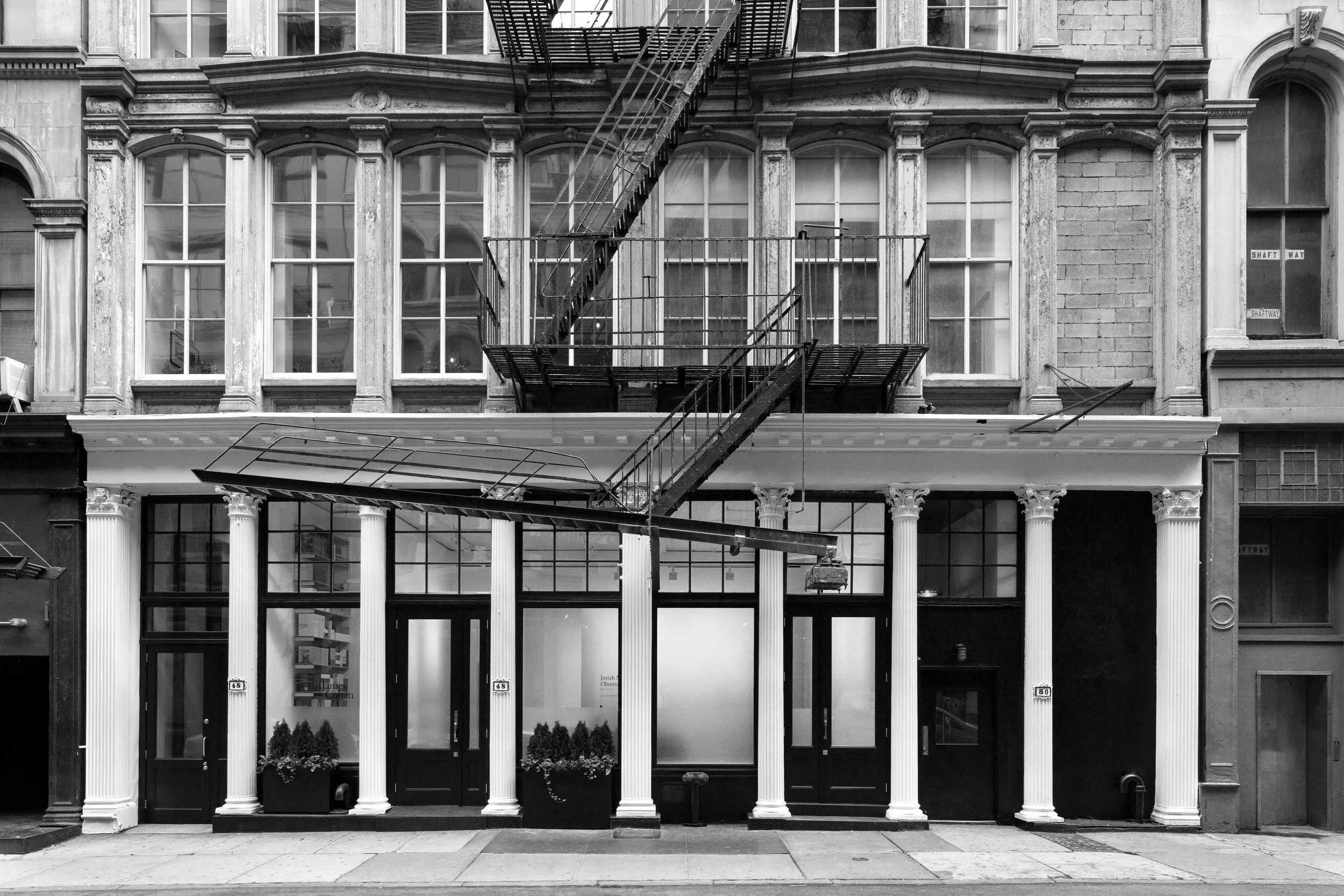
Because not all closures are the same. And in a sector still processing the shock of Stephen Friedman and Pace, the ability to make that distinction matters. Amid the uncertainty, one announcement stood out, not for its scale, but for what it represented. In mid-July, James Cohan Gallery announced that it would become Norr Cohan, as longtime employee, partner, and co-owner David Norr assumes sole ownership of the business. A transition two decades in the making. A model the sector rarely manages. And a reminder that stability, longevity, and legacy go hand in hand.
This section asks:
When does a gallery closure signal genuine distress, and when is it simply a real estate decision?
In a sector defined by contraction and uncertainty, what does it look like when a gallery gets its priorities right?
Is the Norr Cohan model a template the rest of the industry could follow, and if so, why don't more galleries try?
Want to read the full analysis?